Teeth Whitening With Crowns, Veneers, or Implants: What You Need to Know
Uncategorized
October 21, 2025
Teeth whitening is one of the most popular cosmetic dental treatments. But if you have crowns, veneers, implant restorations, or other dental work, whitening gets more complicated. Knowing how whitening interacts with dental restorations can save you from disappointing results and help you plan a smile that looks consistent and natural.
The basic problem
Whitening products, whether professional-grade or over-the-counter, work by penetrating natural tooth enamel and breaking down stain compounds within the tooth structure. This lightens the natural tooth from the inside out.
Dental restorations are made from different materials like porcelain, zirconia, composite resin, or acrylic. None of them respond to bleaching agents the way natural enamel does. Whitening gel will not change the color of a crown, veneer, bridge, implant crown, or denture tooth. The restoration stays exactly the shade it was when it was made.
So if you whiten your natural teeth, they'll get lighter, but your restorations won't. The result can be a noticeable mismatch, with white natural teeth sitting next to yellower-looking crowns or veneers.
Whitening before getting restorations
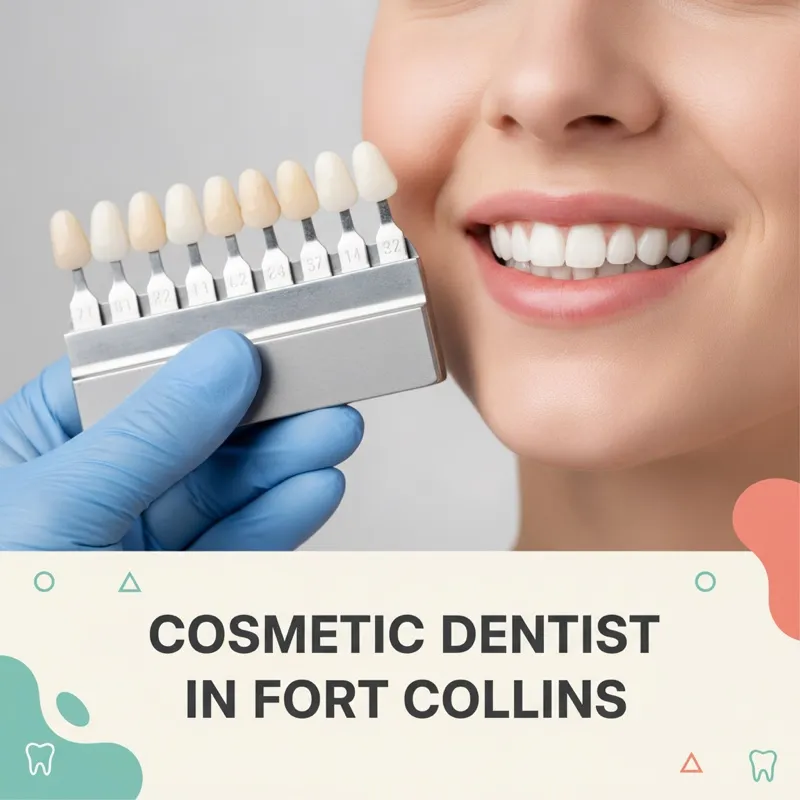
If you're planning to get new crowns, veneers, or implant restorations and you also want whiter teeth, the right approach is to whiten first. Get your natural teeth to the shade you want, let the color stabilize for about two weeks, and then have your restorations made to match that new, whiter shade.
This is a standard part of cosmetic dentistry planning. Your prosthodontist can coordinate the whitening and the restoration process so everything matches when the work is complete.
Whitening after getting restorations
If you already have restorations in place and your natural teeth have darkened around them, the situation is trickier. You have a few options.
Whiten to match
If your restorations are still in good shape but your natural teeth have stained, whitening the natural teeth can bring them back closer to the shade of the restorations. This works best when the restorations were originally made to match lighter natural teeth. You're essentially returning your natural teeth to where they were when the restorations were placed.
The risk is that you may not be able to get an exact match. Natural teeth whiten unevenly, and the degree of lightening varies from person to person. Your prosthodontist can help you set realistic expectations.
Replace the restorations
If you want teeth significantly whiter than your current restorations, the only reliable option is to whiten your natural teeth to the desired shade and then replace the restorations to match. This is a bigger commitment in terms of time and investment, but it's the only way to achieve a truly uniform result at a dramatically different shade.
Veneers as a comprehensive solution
For patients who want a complete smile transformation with whitening plus improved shape, alignment, and consistency, porcelain veneers across the visible teeth can address everything at once. Each veneer is custom-made to the desired shade, so there's no mismatch concern.
Specific restoration types
Porcelain crowns and veneers
High-quality porcelain is highly stain-resistant. Porcelain crowns and veneers maintain their shade well over time and don't typically yellow the way natural teeth do. If your porcelain restorations still look good but your natural teeth have darkened, whitening the natural teeth is usually the simplest path to a uniform look.
Composite restorations
Composite resin (tooth-colored filling material) can stain and discolor over time, especially with coffee, tea, wine, and tobacco. Unlike porcelain, composite doesn't hold its color as well. Whitening won't lighten stained composite, so the restoration may need to be replaced if it's noticeably discolored.
Implant crowns
The crown on top of a dental implant behaves like any other crown. It won't respond to whitening. If you're whitening your natural teeth, the implant crown will need to be evaluated for color match. In some cases, the implant crown may need to be replaced to match your new shade.
Dentures
Denture teeth are made from acrylic resin and cannot be whitened with bleaching products. If your dentures are stained, professional cleaning by your prosthodontist can improve their appearance, but the original shade cannot be changed. If you want lighter teeth, new dentures would need to be made in the desired shade.
Planning makes the difference
Teeth whitening and dental restorations can coexist well, but the timing and coordination matter. If you're thinking about whitening, factor it into your overall treatment plan early rather than treating it as an afterthought. Whether you're whitening before new restorations or trying to match existing ones, your prosthodontist can walk you through the process and help you avoid a color mismatch.
Schedule a consultation
At Northern Colorado Dental Specialty and Implant Center, our board-certified prosthodontists handle both cosmetic and restorative dentistry. If you want a brighter smile and have existing dental work, we'll help you develop a plan that gives you a consistent, natural-looking result.
Call us at 970-825-0000 or schedule a consultation.