Dental Bridges in Fort Collins: What to Expect, Start to Finish
Full Mouth Restoration
October 9, 2026
If you've been told you need a bridge, you've probably already looked up what one is. A dental bridge fills the gap left by a missing tooth with a replacement tooth held in place by the teeth or implants on either side. What's harder to find is what the process is like for you, how many visits it takes, how you eat afterward and how long the thing is supposed to last.
That's what this post covers. If you're still deciding between a bridge and an implant, start with our comparison of dental implants vs. bridges, because this post picks up after that decision has been made.
First, Figuring Out Which Bridge You Need
Your first visit is an exam, and it's mostly about the teeth next to the gap. A bridge depends on what's holding it up, so your prosthodontist will check whether those neighboring teeth are healthy and strong enough to carry the extra load, and how your bite comes together over that space.
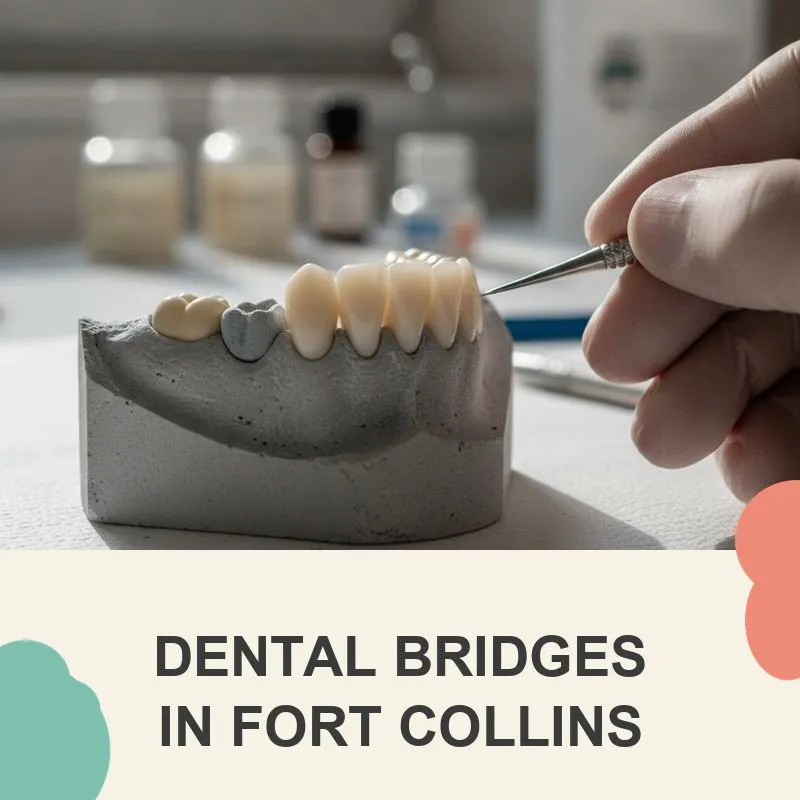
What we find there decides the type of dental bridge that makes sense. If you have healthy teeth on both sides of the gap, a traditional bridge is the most common answer. If there's a tooth on only one side, a cantilever bridge may work. A Maryland bridge is bonded to the backs of the neighboring teeth and is more conservative, and if you're missing several teeth in a row or would rather leave your natural teeth alone, an implant-supported bridge anchors to implants instead.
What Happens at Your Bridge Appointments
Most traditional bridges take two appointments. At the first one, we numb the area with local anesthetic and reshape the teeth on either side of the gap so a crown can fit over each of them. Then we take an impression or scan, which is the step that decides how well your finished bridge fits, and you leave wearing a temporary bridge that protects those teeth and fills the space in the meantime.
At the second appointment, we check the fit, your bite and the color before anything is cemented for good. Small adjustments happen here, and if something isn't right, it's far better to catch it now than after the bridge is permanent. Most patients describe the whole process as involving minimal discomfort.
Why the On-Site Lab Matters for a Bridge
Most offices mail that impression to an outside lab and wait for the bridge to come back. Ours is made in our on-site dental lab, by technicians who work next to the prosthodontist treating you. A bridge has to match the teeth around it and hold up to chewing across a span of several teeth, so being able to look at your teeth in person, talk through a problem and adjust the work right away means fewer surprises at your second visit.
Eating and Living With a New Bridge
After either appointment, wait until the numbness wears off before you eat anything hot, because you won't be able to feel whether it's burning you and it's easy to bite your cheek. While you're wearing the temporary, stick to softer food and skip anything sticky or hard, since a temporary isn't built to take the same abuse as the finished bridge.
Once the permanent bridge is in, you should be able to eat normally, although it can take a few days for your bite and your tongue to get used to it. If your bite still feels high after that, call us. It's a quick adjustment, and it isn't something you should try to get used to.
How Long Does a Dental Bridge Last?
With good care, a bridge typically lasts 10 to 15 years or longer. It's fixed in place, so you won't take it out at night the way you would a denture, but it isn't permanent in the sense of lasting forever. Its lifespan usually comes down to the health of the teeth holding it up, which is why the way you clean around it matters so much.
How to Take Care of a Dental Bridge
Brush twice a day like you normally would, and pay attention to the gum line around the supporting teeth. The tricky part is the space under the replacement tooth, because regular floss can't get through a bridge from the top. A floss threader or water flosser solves that, and we'll show you how to use one. If plaque is left to build up under there, the supporting teeth can decay or the gums can get inflamed, and that's what puts the bridge at risk.
Keep up with your regular cleanings too, and don't use your bridge to chew ice or open packages. Those are good rules for natural teeth as well, but porcelain doesn't heal when it chips.
What Affects the Cost of a Dental Bridge
The cost of a bridge varies with how many teeth it replaces, which type you need, the materials used, and whether the supporting teeth need any work first. An implant-supported bridge also includes the implants themselves, which changes the picture. That's why we give you a personal estimate at your consultation rather than quoting a number for a mouth we haven't seen.
Many dental insurance plans cover part of a bridge, so it's worth checking your benefits before you come in. We also offer financing options for the remainder.
What If You Wait?
A gap doesn't stay the way it is. Neighboring teeth tend to drift into the open space over time, and the tooth above or below can move too, which can change your bite and make a bridge harder to place later. We go through that in more detail in what happens if you don't replace a missing tooth.
Getting Started on Your Bridge
Our office is in Fort Collins, and we see patients from across Northern Colorado for this work. Come in for an exam and we'll tell you which bridge fits your situation, how many visits it will take and what it would involve for your teeth. Call us at 970-825-0000 or schedule a consultation.