Finding a Cosmetic Dentist in Fort Collins: Why Specialist Training Matters
Full Mouth Restoration
September 2, 2026
Search for a cosmetic dentist in Fort Collins and you'll get a long list of practices, all of them showing you the same before-and-after photos of very white teeth. There's nothing wrong with any of them, but the search doesn't tell you the one thing that actually separates them, which is what training the person doing the work has behind them.
Most patients don't know that going in, and it's the thing that would actually narrow the list.
"Cosmetic Dentist" Is a Description, Not a Specialty
Any licensed dentist can describe themselves as a cosmetic dentist. It isn't a recognized dental specialty and there's no separate credential behind it, so the phrase tells you what a practice wants to sell, not what its training is.
Prosthodontics is a recognized specialty. It takes three years of full-time residency after dental school, and the entire focus of those three years is replacing and restoring teeth: how a smile is designed, how materials behave, how a bite comes back together, and how a restoration is made to look like it grew there. Cosmetic work is the everyday content of that training rather than a service line added on top of general practice.
That doesn't mean a general dentist can't do beautiful work. Plenty do. It means the label on the website isn't the thing to evaluate, and the training behind it is.
Where the Difference Actually Matters
For a single filling or a whitening tray, honestly, not much. The gap opens up as soon as a case involves more than one tooth or anything structural.
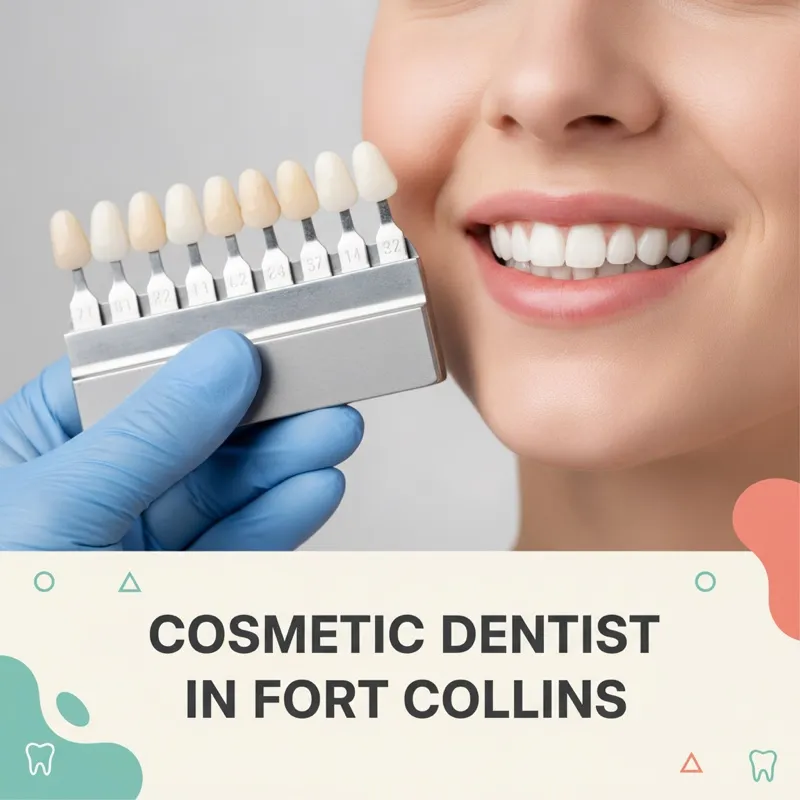
Start with shade matching. Getting a single front tooth to disappear next to its neighbors is much harder than making eight teeth uniformly white, because your natural teeth aren't one flat color. They're more translucent at the edge, warmer near the gum, and slightly different from each other. A veneer or crown that ignores that reads as fake even when it's technically well made.
Then there's your bite, which patients never think about until something breaks. Veneers and crowns sit in a system that's already under load every time you chew or clench, and if that force is landing unevenly, the restoration takes the damage. A prosthodontist is evaluating that before designing anything, which is why the answer sometimes turns out to be a nightguard first and veneers second.
Sequencing matters too, once a case involves more than one procedure. If you're combining whitening, veneers and a crown or two, the order those things happen in determines whether the shades match at the end. Whitening after the porcelain goes in doesn't work, because porcelain doesn't lighten.
Who Actually Makes Your Veneers
The best treatment plan in the world still depends on who fabricates the restoration. Most practices send that work to an outside commercial lab, where a technician who has never seen your face matches your shade off a written note.
Our lab is in the building. The technician can look at your teeth directly, in real light, and adjust from what they see rather than from a code on a form. If the shade isn't right the first time, it gets remade here instead of shipped back and forth for a few more weeks. On cosmetic cases, where the whole point is that nobody can tell which teeth were worked on, that proximity does more for the outcome than any single material choice.
Four Questions to Ask Before You Book
Ask these at any practice you're considering, ours included.
What training does the person doing the work have beyond dental school. Where is my restoration being fabricated, and what happens if the shade comes back wrong. Are you evaluating my bite before we design anything. And can I see photos of cases like mine, not just the practice's best results.
That last one matters more than it sounds. Every office has a portfolio of its greatest hits. Asking for a case that resembles yours, with the same problem you have, gets you a much more honest picture of what to expect.
If You're Still Deciding
We're a prosthodontic practice in Fort Collins, so the cosmetic and restorative work is what the training is in rather than something added to the schedule. Bring us the thing you'd change about your smile and we'll walk you through the options that would get you there, what each one asks of your teeth, and what order it would need to happen in. Call 970-825-0000 or schedule a consultation.